
For many Arizona families, a parenting schedule involves much more than deciding where a child sleeps during the week. A child may have weekly therapy, ADHD medication, tutoring, occupational therapy, behavioral health services, an Individualized Education Program, or a Section 504 plan at school. Children with ADHD, children with autism, and other children with special needs may depend on routines and services that need to continue even when they move between two homes.
Arizona family courts make legal decision-making and parenting orders based on the best interests of the child. Under A.R.S. § 25-403, the court considers factors that include the child’s relationships with each parent, adjustment to home, school, and community, and the physical and emotional health of the people involved. For a child who relies on therapy, medication, behavioral services, or educational accommodations, each parent’s ability to support those needs can become an important part of the case.
Here’s what this article will cover:
- Arizona Legal Decision-Making and Why Consistency Matters
- Creating Consistent Care Across Two Homes
- Therapy, ADHD Medication, Behavioral Supports, and Parent Training
- IEPs, Section 504 Plans, Autism, and Other Special Needs
- Drafting Arizona Court Orders and Creating a Workable Schedule
- Resolving Disagreements and Modifying an Existing Order
- FAQs About ADHD, Therapy, IEPs, and Arizona Parenting Orders
- How the Law Offices of Daniel Hutto Can Help
A carefully written order can prevent many disagreements before they affect the child. It can identify who schedules appointments, how parents communicate with therapists and teachers, how medication moves between homes, who attends IEP meetings, and what happens when an appointment falls during the other parent’s scheduled time. Parenting a child with ADHD or another condition does not require two identical households. The goal is to make sure your child receives reliable care, education, and support while maintaining healthy relationships with both parents whenever that arrangement is safe and appropriate.
How an Arizona Criminal Defense Attorney Can Help
Our Phoenix Criminal Defense Attorneys are Here to Help!
Arizona Legal Decision-Making and Why Consistency Matters
Arizona law separates legal decision-making from the schedule during which a parent has the child. A.R.S. § 25-401 defines legal decision-making as the legal right and responsibility to make nonemergency decisions involving subjects such as education, health care, religious training, and personal care. The statute separately defines the scheduled periods during which each parent has access to the child and handles routine daily care.
This distinction matters when children receive ongoing medical, educational, or behavioral services. A parent might spend substantial time with the child without having sole authority to change a therapist, discontinue medication, move the child to a different school, or make another major health or education decision.
Joint legal decision-making generally means the parents share responsibility for major decisions. An order may also specify that one parent’s authority is superior for a certain subject. Sole legal decision-making gives one parent authority over major decisions, subject to the wording of the court order and applicable Arizona law.
A.R.S. § 25-403.02 requires Arizona parenting plans to address several practical subjects, including:
- Each parent’s rights and responsibilities
- Education and health care decisions
- A practical schedule for the child
- Transportation and exchanges
- Procedures for resolving disputes
- How parents will communicate
- Procedures for reviewing and changing the arrangement
For parents of children with ADHD, autism spectrum disorder, anxiety, learning disabilities, developmental conditions, or other special needs, these details can be especially important.
Children often benefit when the adults responsible for their care follow a reasonably consistent approach to major medical and educational needs. Consistency does not mean every household rule needs to be the same. One home may serve dinner earlier. One parent may allow more television. Another may have different weekend activities.
The concern is whether differences between homes interfere with:
- Medication
- Therapy
- Sleep
- School attendance
- Behavioral goals
- Emotional regulation
- Homework
- Educational services
- Executive functioning supports
Many children with ADHD receive more than one type of care. Depending on the child, this may include medication, counseling, behavior therapy, academic accommodations, parent training, tutoring, or organizational help.
A.R.S. § 25-403 also directs Arizona courts to consider the child’s adjustment to home, school, and community. When a child receives recurring services, evidence about whether each parent supports those services can become relevant to the child’s best interests.
The family law attorneys at the Law Offices of Daniel Hutto can help parents identify areas where an existing or proposed court order may be too vague. Clear language can prevent small scheduling problems from becoming larger legal disputes.
Creating Consistent Care Across Two Homes
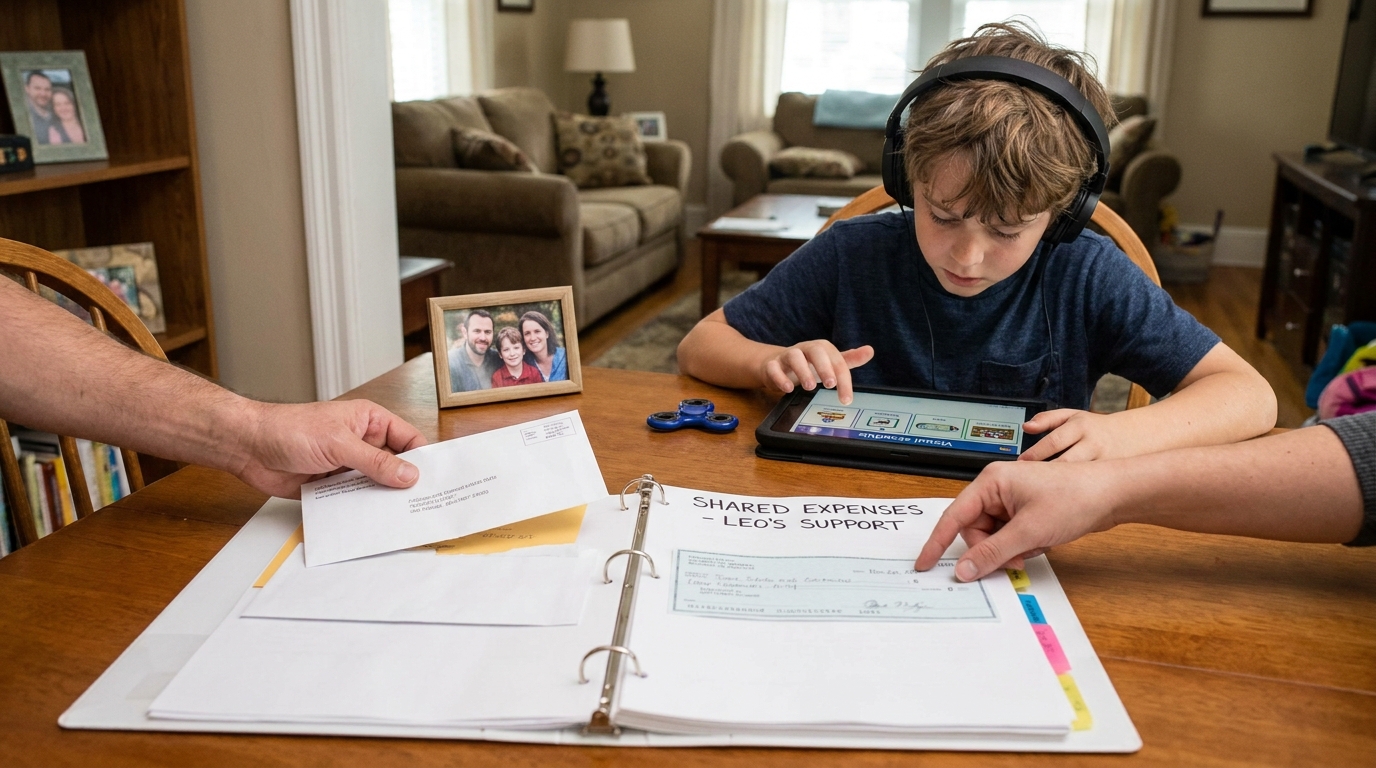
Many parents believe that caring for a special needs child means both homes must operate exactly the same way. That is rarely necessary. A workable approach focuses on the parts of the child’s care that truly require coordination while giving each caregiver reasonable control over ordinary household life.
For example, both parents might agree that medication is given according to the prescription, homework is checked, therapy remains on the calendar, and important school materials move with the child. One household may still have a different bedtime routine or different weekend activities.
A simple care routine might include:
- Checking medication before exchanges
- Keeping school materials together
- Sharing appointment information
- Following major provider recommendations
- Maintaining access to the school portal
- Giving the child advance notice of schedule changes
- Keeping needed comfort or sensory items available
- Sharing significant changes in behavior or health
For children with ADHD may experience difficulty with transitions, a predictable exchange process can reduce confusion. Parents can tell your child when the exchange will occur, prepare school supplies in advance, and make sure needed medication or therapy items are ready.
It is also important to let your child know that therapy, tutoring, occupational therapy, or another service is intended to help. Treatment should not be described as punishment or as something the other parent is forcing on the child.
Parents often bring their own childhood experiences into decisions about discipline, counseling, medication, or school support. A parent’s experience as a child can influence how that parent views the situation, but decisions should focus on the current child’s needs.
Open lines of communication can make this much easier. Parents may need to share information involving:
- Medication changes
- Side effects
- Sleep concerns
- Missed assignments
- Behavioral challenges
- Emotional changes
- Upcoming evaluations
- IEP meetings
- Section 504 meetings
- Provider recommendations
Parents do not need to agree about every detail. The goal is to provide enough information so each caregiver can care for your child safely and responsibly.
Care Consistency Chart
| Area of Care | What Should Stay Consistent | Where Parents May Have Flexibility |
| Medication | Dosage, prescription instructions, provider recommendations, and access to medication | How reminders fit into each household’s routine |
| Therapy | Attendance at recurring appointments and major treatment recommendations | Transportation and ordinary scheduling around appointments |
| School | Attendance, IEP or Section 504 services, assignments, and access to school information | Homework location and household study routines |
| Behavioral Support | Major recommendations from qualified treatment professionals | Age-appropriate rewards, consequences, and daily household expectations |
Therapy, ADHD Medication, Behavioral Supports, and Parent Training
An Arizona court order involving recurring therapy should answer predictable questions. A statement that simply says the child will “continue therapy” may not explain who schedules appointments, who provides transportation, how notices are shared, or what happens when treatment conflicts with another activity.
Useful provisions may address:
- Who schedules appointments
- How much notice is provided
- Who transports the child
- Whether both parents communicate with the provider
- How cancellations are handled
- How rescheduled appointments are communicated
- How treatment recommendations are shared
- How uncovered costs are addressed
- What happens if the parents disagree about treatment
A.R.S. § 25-403.06 generally gives both parents equal access, upon reasonable request, to specified information concerning the child’s education and physical, mental, moral, and emotional health unless another law or court order provides otherwise. This can include medical and school records.
Therapy records may involve additional confidentiality concerns. Parents must not assume that every statement a child makes to a psychologist or therapist should become part of the family court case. Mental health professionals may also have professional and legal obligations that limit what information is appropriate to disclose.
ADHD may affect attention, impulse control, organization, emotional regulation, and other areas of daily functioning. ADHD often looks different from one child to another. A child may perform well in one setting and struggle in another.
Some children with ADHD may receive:
- Prescription medication
- Behavior therapy
- Parent training
- Individual counseling
- School accommodations
- Organizational support
- Social skills services
- Occupational therapy
- Academic intervention
The U.S. Department of Health and Human Services, through the Centers for Disease Control and Prevention, recognizes behavior therapy and parent training in behavior management as forms of ADHD treatment. Parent training programs can teach adults practical ways to reinforce good behavior, give clearer instructions, and create predictable expectations.
Behavior management strategies might include:
- Giving one direction at a time
- Using simple routines
- Praising positive behavior
- Creating predictable consequences
- Breaking large tasks into smaller steps
- Reducing distractions during homework
- Using visual reminders
- Giving advance notice before transitions
Parents can help by using techniques recommended by qualified providers without expecting each home to function identically.
Medication requires additional planning. Parents should determine:
- Where medication is stored
- Who requests refills
- How dosage changes are shared
- How medication reaches the other home
- How side effects are reported
- How school-administered medication is handled
A.R.S. § 25-403.06 also addresses parental access to prescription medication. The precise wording of the court order should always be reviewed before a parent assumes authority over a disputed medical decision.
Parenting strategies should also change as children grow. What helps a five-year-old may not work for a teenager. Parents can help children develop independence while still providing needed structure.
The Law Offices of Daniel Hutto can help parents draft terms that protect treatment continuity without placing every ordinary household decision under court supervision.
IEPs, Section 504 Plans, Autism, and Other Special Needs
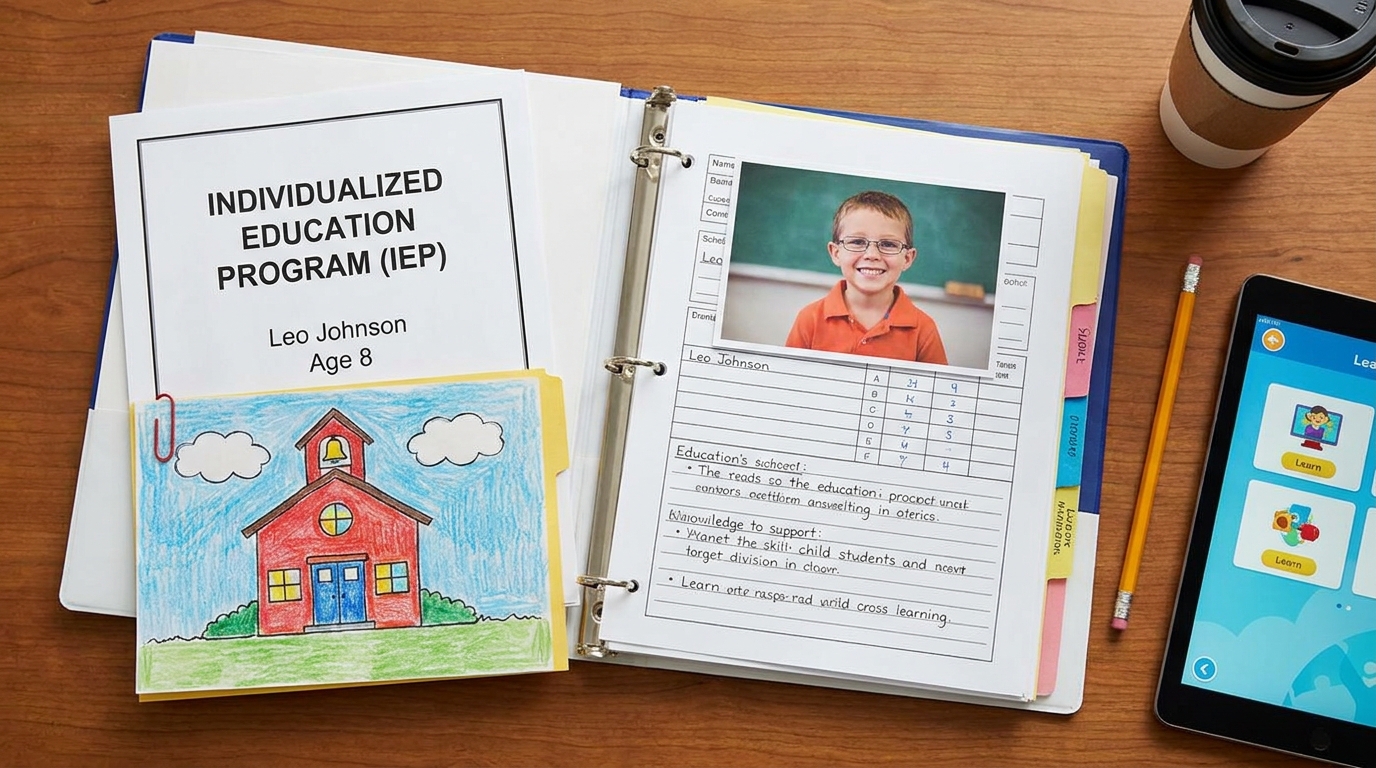
An Individualized Education Program, commonly called an IEP, is a written educational program for an eligible child with a disability. Arizona’s special education statutes define IEPs, IEP teams, special education, and several disability categories under A.R.S. § 15-761.
A.R.S. § 15-763 also addresses the provision of special education services by Arizona school districts and charter schools. Federal protections under the Individuals with Disabilities Education Act require schools to provide qualifying students with appropriate special education services and give parents participation rights during the IEP process.
An IEP can include a wide range of services depending on the child’s unique needs, such as:
- Academic goals
- Specially designed instruction
- Testing accommodations
- Speech therapy
- Occupational therapy
- Behavioral services
- Assistive technology
- Classroom accommodations
- Progress monitoring
- Transition services when appropriate
Some children with ADHD qualify for special education services, while others may receive support through Section 504. ADHD does not automatically qualify every child for an IEP. Eligibility depends on the child’s educational needs and the applicable legal standards.
Educational and psychological evaluations may examine areas such as:
- Academic performance
- Attention
- Communication
- Cognitive skills
- Behavior
- Social functioning
- Emotional functioning
- Learning needs
Parents attend these meetings as part of the team. When possible, they should focus on the child’s educational needs rather than family court disagreements.
Parents can improve participation by bringing:
- Relevant evaluations
- Questions for the school
- Examples of difficulties at home
- Information from outside providers
- Notes about the child’s strengths
- Concerns about current services
- Questions about progress
A clear understanding of your child’s strengths can help parents communicate more effectively with educators.
Children with autism may need additional support involving communication, sensory needs, social skills, transitions, or behavior. Autism spectrum disorder is included among Arizona’s special education disability categories when applicable statutory requirements are met.
Children with autism may receive:
- Speech therapy
- Occupational therapy
- Behavioral services
- Communication support
- Sensory accommodations
- Specialized instruction
- Social skills support
- Assistive technology
Children with special needs may also react strongly to unexpected changes. A child may need visual schedules, advance warning, familiar exchange locations, communication devices, sensory items, or added time to transition between households.
These needs do not automatically mean that a parent should lose scheduled time. The better solution may be changing the exchange process.
For a special needs child, parents should also consider whether medication, communication devices, adaptive equipment, or therapy materials need to move between homes.
Parents can help by keeping current emergency contacts, medication information, provider information, and important instructions available to both households.
Drafting Arizona Court Orders and Creating a Workable Schedule
A strong court order should be specific enough to address foreseeable disagreements while remaining flexible enough to work as the child develops.
Subjects that may need attention include:
- Legal decision-making authority
- Therapy
- Behavioral health treatment
- Medication
- School communication
- IEP and Section 504 participation
- Transportation
- Medical records
- School records
- Emergency communication
- Provider information
- Dispute resolution
- Periodic review
Court Order Drafting Chart
| Issue | Questions the Order Should Address | Relevant Arizona Law |
| Legal Decision-Making | Who makes major medical and education decisions? | A.R.S. §§ 25-401 and 25-403.01 |
| Therapy | Who schedules appointments, provides notice, and handles transportation? | A.R.S. §§ 25-403 and 25-403.02 |
| Medication and Records | How will medication and records remain available to both parents? | A.R.S. § 25-403.06 |
| School and IEP Services | Who receives notices, attends meetings, and reviews evaluations? | A.R.S. §§ 15-761 and 15-763 |
| Disagreements | Will parents use written discussion, mediation, or another process? | A.R.S. § 25-403.02 |
No schedule fits every family. The child’s age, school location, therapy frequency, distance between homes, sibling schedules, parental work schedules, and developmental needs all matter.
When creating a schedule, parents should consider:
-
- School start and dismissal times
- Therapy days
- Transportation time
- Medication needs
- Homework demands
- Sleep needs
- Sibling schedules
- Provider locations
- Extracurricular activities
- The child’s tolerance for transitions
| Day | Schedule Example | Care Responsibility |
| Monday | Parent A | Homework, medication, school messages |
| Tuesday | Parent A until therapy, Parent B afterward | Parent A transports to therapy, Parent B picks up afterward |
| Wednesday | Parent B | Medication, assignments, ordinary school routine |
| Thursday | Parent B | Tutoring or behavioral services |
| Friday | Alternates | Weekend parent checks medication and school supplies |
| Sunday Exchange | Weekend parent until exchange | Medication, therapy items, school materials, and equipment transfer |
Example Weekly Schedule Chart
This schedule is only an example. A 5-2-2-5 arrangement, alternating weeks, school-week arrangement, or another schedule may be more appropriate.
Transportation should be realistic. If the child’s school is in Chandler, therapy is in Scottsdale, and the parents live in different areas of Maricopa County, a court order should account for the driving required.
Resolving Disagreements and Modifying an Existing Order
Parents can disagree about treatment for legitimate reasons. One parent may believe counseling should begin immediately, while another wants another professional opinion. One may support medication while the other wants more information.
Parents may also disagree about:
- Special education testing
- IEP services
- Section 504 accommodations
- Medication
- Therapy providers
- Tutoring
- Behavioral treatment
- School placement
The legal analysis starts with the current order. If one parent has authority over the disputed subject, that fact matters. If decision-making is shared, both parents may have responsibilities that must be respected.
A.R.S. § 25-403.02 requires a dispute resolution process in the parenting plan. Depending on the order, parents may use mediation, conciliation services, private counseling, written communication, or another process.
Parents can often improve the discussion by obtaining neutral information from:
- Pediatricians
- Therapists
- Psychologists
- Psychiatrists
- Teachers
- School psychologists
- Special education teams
- Evaluations
- Progress reports
- Provider recommendations
Parents should also avoid asking the child to become a messenger. Keep the child as well as possible outside the adult dispute.
A focused message is usually more useful than an accusation. Instead of writing, “You never support therapy,” a parent could write, “The therapist recommends eight weekly sessions followed by a progress review. Do you agree that the child should attend through that review?”
Existing orders may also become outdated. Changes that may justify reviewing an arrangement include:
- A new ADHD or autism diagnosis
- Increased therapy frequency
- New behavioral health concerns
- Qualification for special education
- Repeated missed appointments
- A school change
- Major transportation problems
- New developmental needs
A.R.S. § 25-411 governs modifications of legal decision-making and parenting time orders. The statute includes timing rules and exceptions depending on the facts of the case.
A new diagnosis does not automatically mean a parent should lose time with the child. Sometimes the better solution is changing transportation, medication procedures, exchanges, or communication requirements.
Arizona Example: Weekly Counseling
A Phoenix family uses an alternating-week schedule. Their 11-year-old begins weekly counseling on Wednesday afternoons.
The parents could address the problem by:
- Making therapy a standing appointment
- Assigning transportation in advance
- Giving therapy priority over ordinary activities
- Requiring notice before cancellation
- Reviewing the arrangement after several months
This allows the child to maintain care without automatically reducing either parent’s involvement.
Arizona Example: ADHD and an IEP
A child in Chandler has ADHD and an IEP. One parent regularly attends school meetings, while the other says notices are not being shared.
A revised order could require:
- Both parents to be listed as school contacts when appropriate
- Both parents to receive evaluations
- Shared portal access
- Prompt notice of meetings
- A process for discussing proposed changes
The purpose is not to make the parents behave identically. It is to protect the child’s access to education and allow both parents to participate according to their legal rights.
FAQs About ADHD, Therapy, IEPs, and Arizona Parenting Orders
Can one parent take a child to therapy without the other parent’s permission?
It depends on the court order, the type of treatment, and the parents’ legal decision-making rights. Because Arizona treats health care as a legal decision-making subject, the order should be reviewed before a parent makes a disputed nonemergency treatment decision.
Does therapy have to stop during the other parent’s scheduled time?
No general Arizona rule requires therapy to stop simply because the scheduled household changes. An order can state that recurring appointments continue and can assign transportation responsibilities.
Can both parents participate in an IEP meeting?
Federal IDEA rules provide parents with participation rights in the IEP process. The family court order may still affect which parent has authority over education decisions.
Parents should provide the child’s school with current court orders when necessary.
Does ADHD automatically qualify a child for an IEP?
No. ADHD alone does not automatically establish IEP eligibility. A student must meet applicable eligibility requirements and need special education services.
Some children with ADHD may instead qualify for accommodations under Section 504.
Is ADHD caused by bad parenting or a chaotic home?
ADHD should not be reduced to claims about poor parenting or a chaotic home. Families should rely on qualified medical and mental health professionals when evaluating ADHD.
Parents can still play an important role by supporting routines, treatment, sleep, school participation, and positive behavior.
How can parents of children with ADHD support treatment across two homes?
Parents of children with ADHD can focus on the most important areas of care.
Helpful steps include:
- Follow medication instructions.
- Protect recurring appointments.
- Share major medical information.
- Maintain school communication.
- Support healthy sleep.
- Use provider-recommended behavioral strategies.
- Reduce unnecessary conflict at exchanges.
Many children with ADHD need consistency in important areas, not identical households.
Can both parents receive school and medical records?
A.R.S. § 25-403.06 generally gives both parents equal access, upon reasonable request, to specified information concerning the child’s health and education unless another law or court order provides otherwise.
What can parents do when a child struggles with exchanges?
Depending on the child’s unique needs, parents may use:
- Visual schedules
- Advance notice
- Predictable exchange times
- Familiar locations
- Comfort items
- Sensory items
- Calm communication
- Advice from a qualified provider
Parents should not assume that difficulty with transitions automatically means the child should stop seeing the other parent.
How Law Offices of Daniel Hutto Can Help

Arizona parents raising a child with ADHD, autism, behavioral health needs, therapy appointments, or special education services deserve parenting orders that work in real life. A good order should not leave parents guessing about medication, therapy schedules, IEP meetings, Section 504 plans, school communication, transportation, provider access, or behavioral support across two homes. It should provide clear expectations while keeping the child’s health, education, stability, and long-term well-being at the center.
Daniel Hutto founded the Law Office of Daniel Hutto, PLLC, after building experience in family law, at the Maricopa County Attorney’s Office, in boutique private practice, and at one of Arizona’s largest criminal defense firms. His firm was created to provide aggressive, complete, and caring representation for Arizona individuals and families dealing with family law and criminal defense matters. That background gives Daniel and his legal team experience handling disputed parenting matters, court hearings, negotiations, and cases where a child’s medical, behavioral, or educational needs become an important part of the family court case.
The legal team at the Law Offices of Daniel Hutto can help with parenting time and legal decision-making matters involving children with ADHD, children with autism, therapy and behavioral health services, medication disputes, IEPs, Section 504 plans, school communication, special needs, and modification requests. The firm can also assist when family law concerns overlap with orders of protection, allegations involving child safety, or related criminal defense issues. Daniel’s background provides the firm with valuable experience in courtroom strategy, negotiation, trial preparation, and, when a related criminal case exists, plea negotiation.
Free one-on-one lawyer consultations are available. To speak with an attorney about parenting time, legal decision-making, therapy, ADHD supports, IEP services, or special needs issues in Arizona, call the Law Offices of Daniel Hutto at 602-932-1655 or request a free consultation through the firm’s contact page.


