
Spring break can be one of the most anticipated times of the year for parents and children, especially for those who are divorced or separated and trying to balance custody and family time. While the goal is to enjoy time off from school, disagreements arise over spring plans more often than many expect. These issues often involve the parenting plan, travel, and how each parent interprets the schedule.
In Maricopa County, custody arrangements must follow a court order, and even a small misunderstanding can lead to a dispute. Questions about school calendars, travel dates, or who has scheduled time can quickly create tension between co-parents. Without clear communication, these situations can escalate into legal issues that affect both parents and the child’s emotional well-being.
Table of Contents
- Spring Break Custody Arrangements and Parenting Time Under Arizona Law
- How School Calendar Conflicts Lead to Custody Disputes
- Parenting Plan Provisions for Exchange, Travel, and Notice
- Written Notice and Travel Consent for Out-of-State and International Travel
- What Happens When One Parent Violates a Court Order
- Makeup Parenting Time, Late Return, and Scheduling Conflicts
- Mediation and Modification to Avoid Future Custody Disputes
- Real World Examples From Maricopa County Custody Cases
- FAQs About Spring Break Custody and Parenting Time
- How the Law Offices of Daniel Hutto Can Help
This article will outline how Arizona law applies to spring break disputes, how to coordinate school calendars and travel, and what options are available when conflicts arise. You will also learn how a family law attorney from the Law Offices of Daniel Hutto helps parents protect their parental rights and keep things calm during difficult situations.
How an Arizona Family Law Attorney Can Help
Our Phoenix Family Law Attorneys are Here to Help!
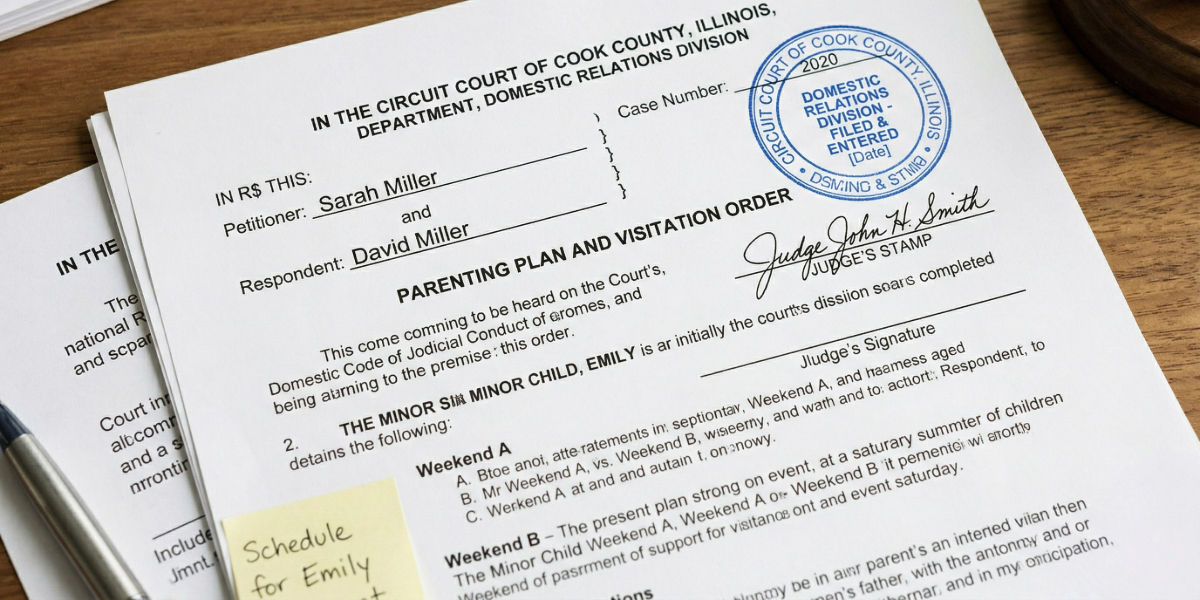
Spring Break Custody Arrangements and Parenting Time Under Arizona Law
Spring break custody arrangements are usually addressed in a court-ordered parenting plan. Under Arizona law, courts focus on the child’s best interests when determining child custody and parenting time. A.R.S. § 25-403 requires judges to consider factors that affect the child’s emotional and physical well-being, including maintaining consistent time spent with the child.
Most custody agreements include a specific provision for school breaks like spring break. These provisions often override the regular parenting time schedule. For example, one parent may have spring break in even years, while the other parent has it in odd years.
Common issues in custody arrangements include:
- The parenting plan does not clearly define spring break
- The custody order is outdated or vague
- Parents interpret the arrangement differently
- Scheduling conflicts arise due to work schedules
When parents agree on how to handle spring break, it creates a cooperative environment that benefits both parents and children. However, when disagreements arise, it is important to review the court order carefully.
A family law attorney from the Law Offices of Daniel Hutto helps parents understand their custody agreements and ensure compliance with Arizona family law requirements. This guidance can go a long way toward avoiding unnecessary conflict.
How School Calendar Conflicts Lead to Custody Disputes
School calendars are one of the most common sources of conflict during spring break. In Maricopa County, different school districts and private schools often follow different schedules, which can create confusion.
Arizona law does not define spring break. Instead, the child’s school calendar is typically used to determine the correct schedule. This can lead to problems when parents rely on different assumptions.
A misunderstanding about the calendar can result in:
- Missed exchanges
- Overlapping travel plans
- A disagreement about parenting time
For example, one parent may plan a vacation based on their own work schedule, while the other parent follows the child’s school calendar. This type of miscommunication can quickly lead to a custody dispute.
To avoid these issues, parents should:
- Share the official school calendar at the start of the year
- Confirm spring break dates early
- Document any agreement in writing
Using co-parenting apps like OurFamilyWizard allows parents to send messages, track schedules, and reduce misunderstandings. These tools help parents coordinate and maintain clear communication.
Parenting Plan Provisions for Exchange, Travel, and Notice
A well-drafted parenting plan should outline how exchanges occur and how travel is handled during school breaks. Under A.R.S. § 25-403.02, parenting plans must include clear details about parenting time and logistics.
Key provisions often include:
- Exchange locations and drop-off times
- Which parent is responsible for transportation
- Travel consent requirements
- Notice to the other parent before trips
Exchange locations should be clearly defined to prevent confusion. If the plan does not specify where the exchange will occur, it can lead to last-minute disagreements.
Parents should also pay attention to any requirement for written notice before travel. Even if one parent has scheduled time, failing to follow the parenting plan can lead to problems.
At the Law Offices of Daniel Hutto, divorce and family law attorneys regularly help parents revise their parenting plan to create a plan that works and supports smooth co-parenting.
Written Notice and Travel Consent for Out-of-State and International Travel
Travel during spring break is common, but it must be handled carefully. Many custody orders require written notice and travel consent before taking a child out-of-state or internationally.
Even though A.R.S. § 25-408 focuses on relocation, similar rules apply to temporary travel. Parents must provide notice to the other parent that includes:
- Travel dates
- Destination and lodging details
- Emergency contact information
International travel often requires additional consent from both parents. Some parenting plans include specific language requiring written permission before leaving the country.
Problems can arise when:
- One parent fails to provide written notice
- Travel interferes with the other parent’s parenting time
- A parent refuses to share details about the trip
Failing to follow these requirements may violate the court order and lead to legal consequences. In some cases, it may even result in contempt of court.
A family law attorney from the Law Offices of Daniel Hutto can step in quickly to address travel disputes and protect your parental rights.
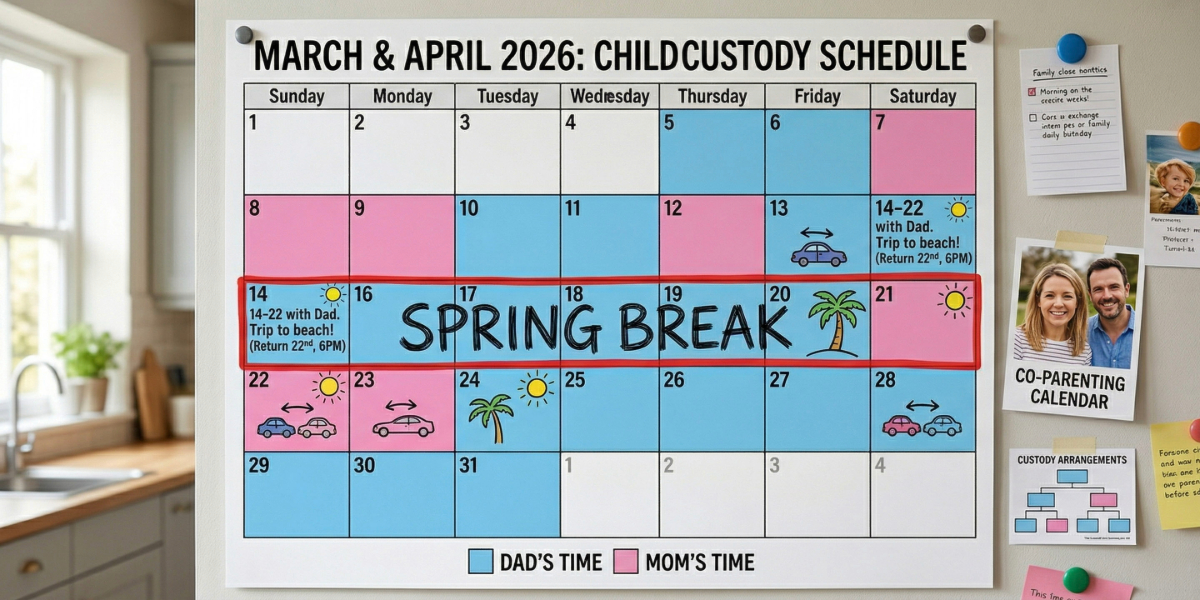
What Happens When One Parent Violates a Court Order
When one parent violates a custody order, the other parent has legal options. Violations may include:
- Failing to return the child after spring break
- Ignoring exchange times or locations
- Breaking the rules related to travel
Arizona courts take these issues seriously. A parent who is failing to follow a court order may face penalties, including fines or changes to custody arrangements.
In more serious cases, the court may find the parent in contempt of court. This can lead to additional consequences, including sanctions or modifications to parenting time.
A custody dispute may also arise if one parent repeatedly interferes with visitation. Courts focus on maintaining the child’s best interests and ensuring both parents have meaningful involvement.
The Law Offices of Daniel Hutto represents clients in high-conflict situations and helps enforce custody orders when necessary.
Makeup Parenting Time, Late Return, and Scheduling Conflicts
Makeup parenting time is often requested when one parent misses scheduled time due to travel delays or scheduling conflicts. Courts will consider whether the parent acted in good faith and whether the request benefits the child.
Common situations include:
-
- Late return after a trip
- Missed exchanges due to miscommunication
- Travel delays affecting the schedule
Makeup Parenting Time Chart
| Scenario | Likely Outcome | Court Consideration |
|---|---|---|
| Late return after vacation | Makeup time awarded | Impact on other parent |
| Travel delay with notice | Makeup time likely granted | Good faith effort |
| No notice provided | Possible penalty | Compliance with parenting plan |
| Repeated violations | Reduced parenting time | Pattern of behavior |
Parents should document any issues and communicate clearly. Thoughtful planning and cooperation can help prevent ongoing disputes.
Mediation and Modification to Avoid Future Custody Disputes
When disputes happen repeatedly, mediation or modification may be necessary. Mediation allows parents to work through issues with a neutral third party and reach an agreement.
If the current parenting plan no longer works, a modification may be needed under A.R.S. § 25-411. This is common when:
- School schedules change
- Parenting time changes are needed
- Communication breaks down
A modification can create a clearer arrangement and help avoid future disputes.
Real World Examples From Maricopa County Custody Cases
Example 1: Miscommunication About Travel
A parent planned an out-of-state trip without providing written notice. The other parent objected, leading to a custody dispute. The court awarded makeup parenting time.
Example 2: Late Return After Spring Break
A parent returned the child two days late, disrupting the other parent’s schedule. The court found a violation and warned against future issues.
Example 3: Conflicting Calendars
Parents relied on different school calendars, leading to a disagreement about parenting time. The court used the child’s actual school calendar to resolve the issue.
These examples show how small mistakes can lead to larger problems if not handled carefully.
FAQs About Spring Break Custody and Parenting Time
Can parents agree to change the spring break schedule?
Yes, parents can agree to changes. It is best to document the agreement in writing.
What if one parent refuses to follow the parenting plan?
You can file a motion with the court to enforce the custody order.
Do I need permission for international travel?
Most parenting plans require travel consent for international travel.
How can we reduce misunderstandings?
Clear communication and using tools like co-parenting apps can help.
What if scheduling conflicts happen?
Courts may allow makeup parenting time depending on the situation.
Can mediation help resolve disputes?
Yes, mediation is often a helpful way to resolve conflicts without going to court.
How the Law Offices of Daniel Hutto Can Help