
Military family life can change quickly. A parent may be stationed at Luke Air Force Base, receive orders outside Arizona, shift from active duty to reserve status, or move between TRICARE plans. When parents are separated, divorced, or raising a child from two households, those changes can affect child support, health insurance, and who pays for medical services.
This article explains how Arizona law treats child support and medical expenses for military families. The main point is simple: a child support order should specify who provides health insurance, how premiums are calculated, who pays for uninsured or out-of-pocket medical expenses, and what happens when coverage changes. Arizona courts use the Arizona Child Support Guidelines and the Income Shares Model, which means both parents’ income is used to calculate child support.
Here’s what this article will cover:
- How Arizona Law Handles Child Support and Health Insurance for Military Families
- How Military Pay and Benefits Affect the Child Support Calculation
- Who Pays Uninsured or Out-of-Pocket Medical Expenses in Arizona?
- Health Insurance Coverage, TRICARE, VA Benefits, and Medical Support Orders
- Active Duty, Deployment, and Modification of the Medical Support Order
- Special Medical Needs, Mental Health Services, Dental Care, and Vision Care
- Real-World Examples for Arizona Military Families
- FAQs About Child Support and Medical Expenses for Military Families
- How Law Offices of Daniel Hutto Can Help
For Arizona military families, the details matter. Basic pay, BAH, BAS, military disability benefits, insurance premiums, TRICARE access, VA-related benefits, dental care, vision care, and special medical needs can all affect the support amount or the medical support order. The legal team at the Law Offices of Daniel Hutto helps parents make sense of these moving pieces, with a focus on practical orders that protect children and reduce future conflict.
How an Arizona Criminal Defense Attorney Can Help
Our Phoenix Criminal Defense Attorneys are Here to Help!
How Arizona Law Handles Child Support and Health Insurance for Military Families
Arizona law treats medical support as part of the child support picture. A.R.S. § 25-320 directs courts to consider the child’s medical support plan, including the child’s medical needs, available medical insurance, Arizona Health Care Cost Containment System services, and whether a cash medical support order is needed. The statute also says the court may order either or both parents to pay a reasonable and necessary amount for the support of a child.
A child support order must assign responsibility for providing medical insurance for the child to one of the parents. It must also assign responsibility for medical costs not covered by insurance, in accordance with the Arizona Child Support Guidelines. Each parent must give the court information about health insurance that is accessible and available at a reasonable cost to ensure that benefits are provided for the number of children involved. Under A.R.S. § 25-320, reasonable cost means an amount that does not exceed the higher of five percent of the obligated parent’s gross income or the income-based standard in the Guidelines.
For military members stationed in Arizona, the court does not simply ask which parent has a military ID card or who has the better plan. The court considers the child’s actual access to care, the cost of insurance coverage, the parents’ incomes, and whether the child can use the plan where they live. This is especially important when one parent is in Arizona, and the other parent is assigned to another state or overseas.
When neither parent can obtain medical insurance that is accessible and available at a reasonable cost, A.R.S. § 25-320 allows the court, in certain Title IV-D cases, to establish a reasonable monthly cash medical support order. The court may also order a parent to provide medical insurance when it becomes available at a reasonable cost.
The Law Offices of Daniel Hutto often helps parents turn vague medical language into clear orders that specify how financial assistance should be allocated. A useful support order should state who carries coverage, how the premium is credited, how deductible and copay costs are shared, how reimbursement requests are sent, and what proof must be exchanged. Clear wording helps both parents know what to do before a medical bill becomes a dispute.
How Military Pay and Benefits Affect the Child Support Calculation
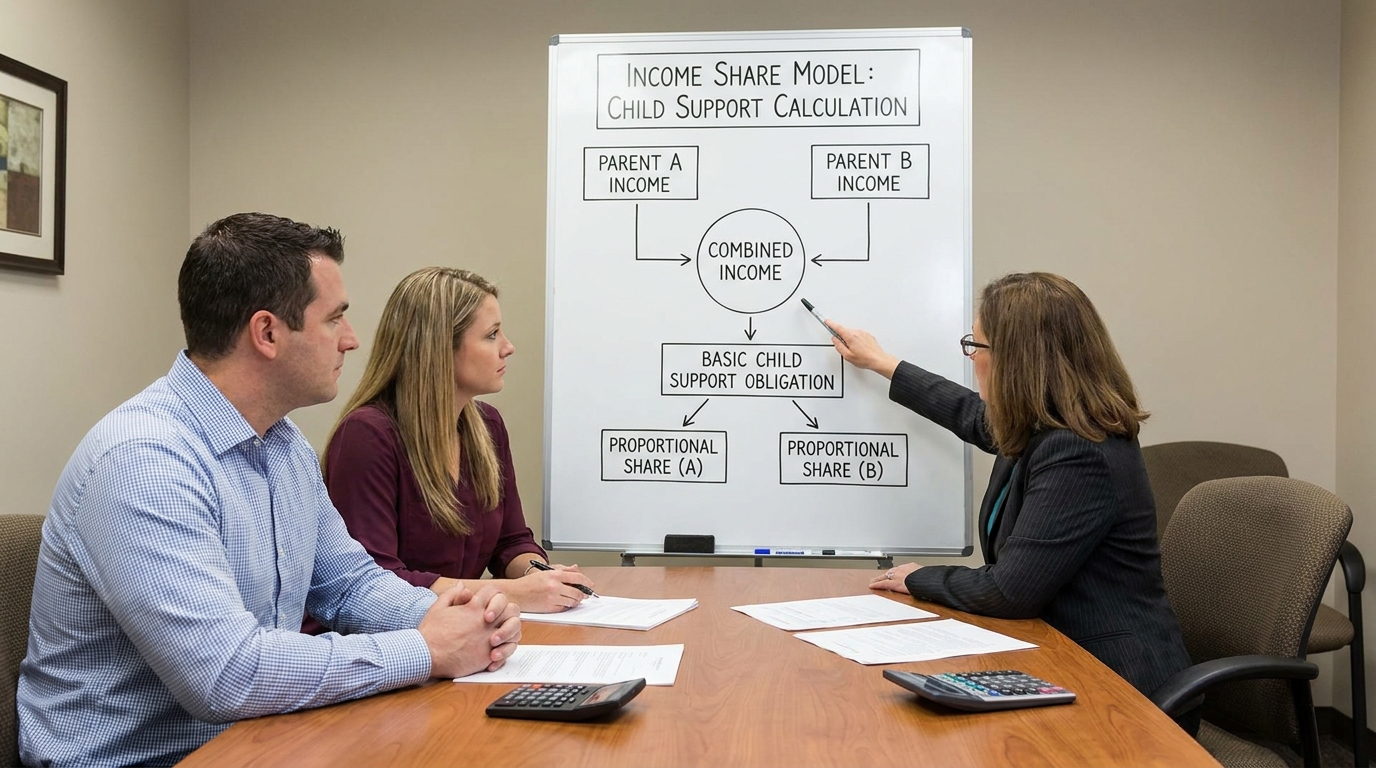
Arizona uses the Income Shares Model, which means both parents’ incomes are part of the calculation. The Arizona Child Support Guidelines say child support income includes income from any source before deductions or withholdings. The Guidelines specifically list military pay and military disability benefits as possible child support income. They also state that continuing or recurring military entitlements, including BAH and BAS, are child support income, and that military-provided housing may be treated as an in-kind employment benefit.
This matters because military pay is not always reflected in the same way as civilian pay. A Leave and Earnings Statement may show base pay, Basic Allowance for Housing, Basic Allowance for Subsistence, special pay, hazardous duty pay, bonuses, or other recurring entitlements. Even if a benefit is not taxable, the court may still count it as income for child support in Arizona if it reduces personal living expenses or is recurring.
Health insurance premiums are handled separately from gross income. The Guidelines explain that the basic child support obligation is adjusted for child-related costs such as medical insurance premiums, childcare costs, and other approved expenses. If a parent actually pays the child’s medical insurance premium, that cost may be added into the calculation and then credited back to the parent who pays the insurance company.
Arizona’s Guidelines also try to count only the cost attributable to the child in the case. If the exact cost for the child is known, that amount is used. If the policy covers the parent, the child, and other dependents, the cost may be prorated. For example, if an employer-sponsored plan or private health insurance plan covers multiple people, the court should avoid giving a parent credit for the entire family premium when only part of that premium covers the child subject to the support order.
Daniel Hutto’s background in family law and courtroom advocacy is useful in cases where the numbers are easy to misread. A military LES, TRICARE enrollment records, proof of premium payments, and orders showing current military status may all need to be presented cleanly. When a parent is facing child support issues while serving in the military or co-parenting with a service member, small errors in income or insurance inputs can change the monthly support amount.
Who Pays Uninsured or Out-of-Pocket Medical Expenses in Arizona?
Insurance does not cover every cost. A child may need to pay a deductible before coverage begins. A provider may charge a copay, which can be considered part of the extraordinary medical expenses that parents must address in support calculations. A specialist may be out of network. A child may need medically necessary dental work, vision care, therapy, medication, testing, or follow-up treatment. These uninsured or out-of-pocket medical expenses are often the source of tension in child support matters.
Arizona’s Guidelines define a non-covered medical expense as medically necessary medical, dental, or vision care, including uninsured and unreimbursed medical expenses, such as copays and insurance deductibles, incurred for the child’s care. The child support order must specify the percentage each parent pays for those non-covered medical expenses.
The percentage is usually tied to each parent’s share of the combined adjusted child support income. If Parent A earns 60 percent of the combined income and Parent B earns 40 percent, the order may require Parent A to pay 60 percent of the non-covered expenses and Parent B to pay 40 percent. The exact percentage should be stated in the support order, so neither parent has to guess after a bill arrives.
Timing matters. Unless good cause is shown, a request for reimbursement of uninsured or unreimbursed medical, dental, or vision expenses must include the date of service, provider name, and a brief description of the goods or services. The request must be sent to the other parent within 180 days after the cost was incurred to ensure proper financial assistance for any extraordinary medical expenses. The parent responsible for payment or reimbursement must pay their share or make acceptable payment arrangements within 45 days of receiving the request, unless the court orders otherwise.
A practical guide to medical reimbursement should be written into the parenting plan or support order when possible. Parents can agree to use email, a co-parenting app, or another written method for receipts. They can also require itemized statements, explanation of benefits records, pharmacy receipts, or proof that insurance was used before requesting reimbursement. The Law Offices of Daniel Hutto can help draft these terms so that the order supports the child’s health and well-being rather than creating more conflict.
| Medical cost issue | How Arizona usually treats it | Practical tip for parents |
| Health insurance premiums | May be added to the child support calculation and credited to the parent who pays the premium. | Keep pay stubs, LES entries, premium notices, and enrollment records. |
| Deductibles and copays | Usually shared by percentage as non-covered medical expenses. | Send reimbursement requests with the date of service, provider name, and receipt. |
| Dental and vision care | May be included when medically necessary or when coverage is actually provided. | Check whether the order covers routine care, orthodontics, glasses, and contacts. |
| Special medical needs | May support specific order language or, in some cases, a request for a deviation. | Use provider letters, treatment plans, and past bills to show the child’s needs. |
Health Insurance Coverage, TRICARE, VA Benefits, and Medical Support Orders
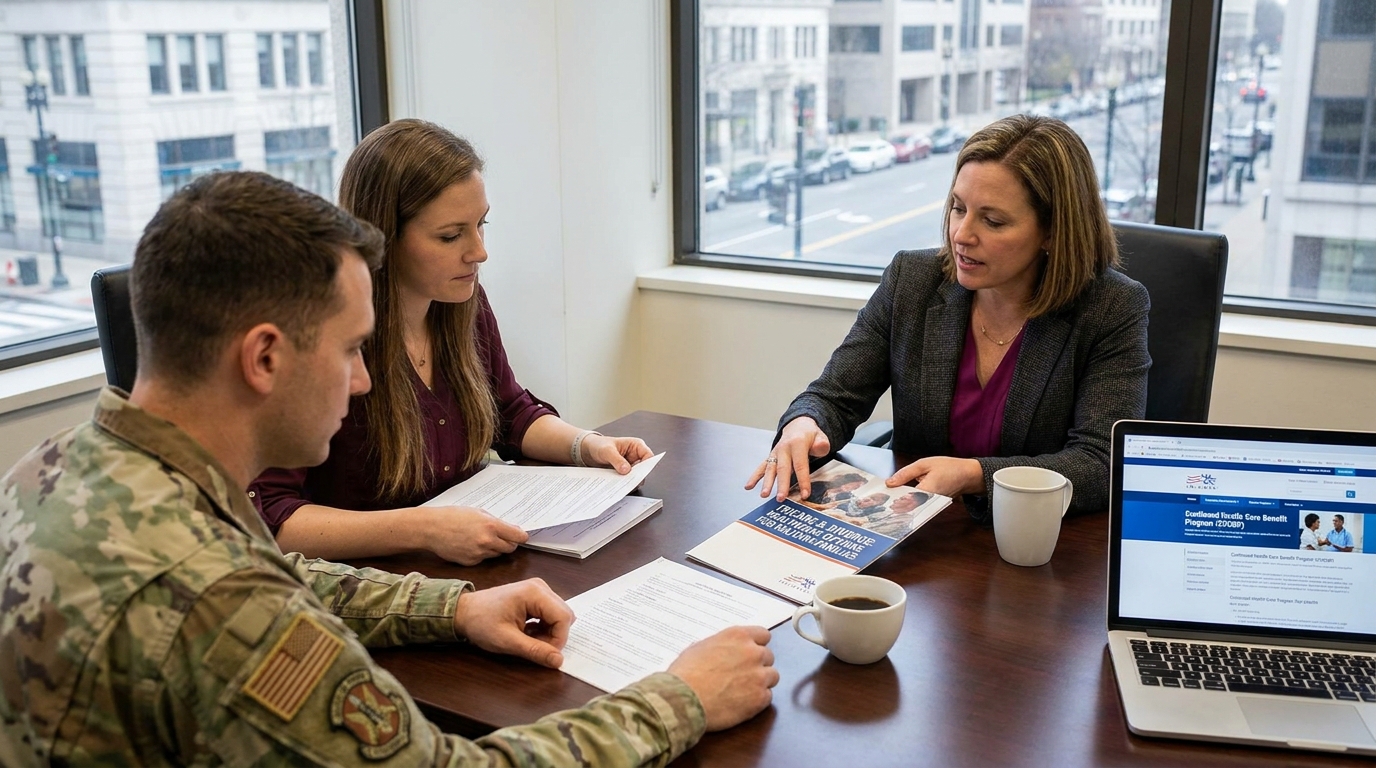
For many military families, TRICARE is the main source of health insurance coverage. TRICARE states that active duty service members and their family members, including spouses and children registered in the Defense Enrollment Eligibility Reporting System, are eligible for TRICARE. Active-duty family members may be able to use TRICARE Prime plans with their sponsor or qualify for other plans, such as TRICARE Select, depending on their status and location.
TRICARE eligibility for children has age rules that may matter in a support order, affecting how benefits are provided. Unmarried biological children, children joined to the family through adoption, and stepchildren are generally eligible until age 21, or until age 23 if in college, and eligibility may extend further for a severely disabled child. TRICARE Young Adult may be available after regular eligibility ends.
TRICARE is not the only program available. Some children, spouses, dependents, and survivors of veterans may qualify for health care benefits through CHAMPVA, the Civilian Health and Medical Program of the Department of Veterans Affairs, when the veteran meets certain service-connected disability requirements, and the person is not eligible for TRICARE. The Department of Veterans Affairs states that CHAMPVA may apply to a spouse or dependent child of a veteran rated permanently and totally disabled due to a service-connected disability, or to certain survivors of veterans who died from service-connected causes.
The existence of TRICARE, CHAMPVA, or another military-connected benefit does not remove the need for clear Arizona child support language. The court still needs to know who is responsible for maintaining coverage, whether the coverage is accessible where the child lives, what premium or enrollment cost applies, and how non-covered medical expenses will be divided. A plan that works well near one duty station may not work well after relocation.
Parents should also pay attention to dental care and vision care. The Arizona Guidelines state that a parent is not obligated to provide dental and vision insurance for a child, but if a parent does provide such insurance, it is included in the medical insurance adjustment. The court may decline to credit insurance coverage if it is not valid in the geographic region where the child lives.
Active Duty, Deployment, and Modification of the Medical Support Order
Active duty military service can affect income, parenting time, access to providers, and health insurance. A parent may receive deployment pay, lose certain allowances after a move, add or remove dependents from a plan, or shift from active duty to reserve and National Guard status. When those changes are significant and ongoing, a parent may need to request a modification of the existing child support order.
The Arizona Department of Economic Security notes that a modification may be requested when medical insurance coverage changes, when the order is more than three years old, or when there has been a substantial and continuing change in circumstances, such as a change in income or custody. DES also lists records of medical insurance cost or coverage, including pay stubs or payments showing who is covered by the policy, as documents that may be needed.
Deployment can also affect parenting time, and parenting time can affect child support. A.R.S. § 25-411 includes specific protections for military families. If the parent with whom the child resides a majority of the time receives deployment, activation, mobilization, or temporary duty orders that require a substantial move, the court generally may not enter a final order modifying parental rights and parent-child contact until 90 days after deployment ends, unless the deploying parent agrees. The statute also allows temporary orders during deployment and may allow limited delegation of parenting time to a family member or another person with a close and substantial relationship with the child, if the court finds it is in the child’s best interests.
Federal law may also affect the timing in active-duty cases. Under the Servicemembers Civil Relief Act, a servicemember who has notice of a civil action and whose military service affects the ability to appear may request a stay. The court must grant a stay of at least 90 days if the statutory conditions are met. This does not erase support obligations, but it can affect hearing schedules and default concerns.
A parent should not stop making support payments just because military duty has changed. A.R.S. § 25-503 provides that the court may order either or both parents to pay support, and that support obligations continue unless and until a court changes the order, which is a key aspect of Arizona family law. If a parent cannot afford the existing amount because their military status has changed, the safer path is to request a modification rather than fall behind.
This is an area where legal help can prevent costly mistakes. Daniel Hutto’s experience includes family law, criminal defense, and prior work with the Maricopa County Attorney’s Office, which enhances his ability to navigate complex financial assistance cases. That background can matter when a family law case overlaps with allegations of nonpayment, protective orders, or enforcement concerns. The legal team can help present military records, calculate child support, and ask the court for orders that reflect current military duty and the child’s medical needs.
Special Medical Needs, Mental Health Services, Dental Care, and Vision Care
Some children need more than routine checkups. A child may need mental health services, occupational therapy, physical therapy, speech therapy, medication management, autism evaluations, ADHD treatment, diabetes care, mobility equipment, orthodontics, glasses, contacts, or regular specialist care. These needs should be addressed in both the medical support order and the parenting plan when possible.
Arizona law allows courts to consider the child’s physical and emotional condition and educational needs when establishing the child support framework. A.R.S. § 25-320 also requires attention to the child’s medical support plan, including medical insurance and whether cash medical support is needed.
The Guidelines recognize that a strict calculation may not fit every case. For example, the Guidelines identify situations in which a deviation may be considered, including when payment of child support would compromise a parent’s ability to receive and afford necessary and extraordinary health care or mental health services, or when a child has unusual emotional or physical needs.
In practice, parents should think beyond the monthly support amount. The order should answer questions like who schedules appointments, who keeps insurance cards, who pays upfront if the provider requires payment at the visit, how prescriptions are shared between homes, and how the parents will approve providers not covered by insurance. These details can be especially important when one parent is deployed, stationed out of Arizona, or working unusual military duty hours.
Medical needs can also create disagreements over what is necessary. One parent may want therapy, while the other questions the cost. One parent may prefer an insurance-covered specialist, while the other prefers an out-of-network provider. A family law attorney from the Law Offices of Daniel Hutto can help organize provider records, insurance information, and Arizona child support laws into a clear court request focused on the child’s health and stability.
Real-World Examples for Arizona Military Families
Example 1:
An active duty service member at Luke Air Force Base, provides TRICARE coverage for a child living in Glendale with the other parent, which may affect the financial assistance calculations. The child is registered in DEERS, and the child’s medical insurance is accessible in the child’s area. The service member also receives BAH and BAS. In Arizona, the support amount should account for military pay, recurring military entitlements, and the actual insurance arrangement, as well as any extraordinary medical expenses incurred. The order should also set percentages for deductible, copay, and other non-covered medical expenses.
In that example, the parent with TRICARE should not assume coverage alone replaces child support. Arizona child support typically includes more than health care coverage. The court still considers both parents’ incomes, parenting time, medical insurance premiums, childcare if applicable, and other guideline factors. If the parent paying support also pays the child’s insurance cost directly, that cost may be credited in the worksheet.
Example 2:
A parent in Mesa has primary parenting time while the other parent is deployed overseas. During deployment, the child begins counseling and needs prescription medication. Some care is covered, but the parent in Mesa pays copays and a deductible. Under the Arizona Guidelines, reimbursement requests should include the date of service, the provider’s name, a brief description, and proof of cost. The request should be sent within 180 days, and the other parent generally has 45 days to pay or make acceptable arrangements, unless the court order says otherwise.
In that same situation, the deployed parent may need temporary parenting time orders under A.R.S. § 25-411, but the medical support language should still protect the child. Parents can arrange for video participation at major medical appointments when allowed by the provider, shared access to patient portals when appropriate, and written notice before major nonemergency care. The goal is not to burden the deployed parent; it is to keep both parents informed and maintain consistent care for the child.
Example 3:
A veteran parent in Tucson has a child who may qualify for CHAMPVA because the veteran has a qualifying service-connected disability rating. The other parent has employer-sponsored plans available through work. The court may need to compare access, cost, and coverage before deciding who should provide insurance coverage. If CHAMPVA or private health insurance covers medical services but leaves copays or uncovered care, the order should still divide those expenses.
These examples show why military child support orders should be specific. Military members and co-parents often deal with changing orders, duty stations, insurance regions, and medical needs. A well-written order can reduce confusion and help children receive care without waiting for parents to argue about payment.
t or travel plans, seeking experienced family law guidance can help you avoid problems and ensure compliance.
FAQs About Child Support and Medical Expenses for Military Families
Does TRICARE mean the military parent does not have to pay child support?
No, the court does not provide financial assistance directly; it merely enforces support orders. TRICARE may satisfy part of the medical insurance requirement, but it does not automatically replace child support payments. Arizona courts still use the Child Support Guidelines to calculate child support based on both parents’ incomes, parenting time, child-related costs, and other inputs.
If the military parent pays a premium or enrollment cost for the child’s health care coverage, that cost may affect the worksheet. The court still needs proof of the cost and proof that the child is covered. A clear child support order should treat health insurance as one part of the larger support obligation.
Are BAH, BAS, and hazardous duty pay counted when Arizona courts calculate child support?
Recurring military pay and entitlements can be counted. The Arizona Guidelines state that child support income includes military pay and military disability benefits, and that continuing or recurring military entitlements, such as BAH and BAS, are also child support income.
Hazardous duty pay, bonuses, or other special pay may require closer review. The court may look at whether the pay is recurring, temporary, or tied to a specific deployment. Current LES and past pay records can help the court avoid using numbers that are too high or too low.
Who pays the deductible, copays, and uninsured medical bills?
The child support order should state the percentage each parent pays for non-covered medical expenses. These expenses can include medically necessary medical, dental, or vision care, as well as copays and insurance deductibles.
A parent requesting reimbursement should submit the required information within 180 days of the cost being incurred. Unless the order says otherwise, the other parent must pay their share or make acceptable payment arrangements within 45 days after receiving the request.
Can a medical support order be changed if the service member deploys or changes duty station?
Yes, depending on the facts. A change in income, health insurance coverage, custody, or parenting time may support a modification request if it is significant and ongoing. DES notes that changes in medical insurance coverage can be grounds to request a review of a child support order.
Deployment can also require temporary parenting time orders. A.R.S. § 25-411 has specific rules for military families, including limits on final changes during deployment and options for temporary orders. A parent should act early after receiving orders so the court has time to address support, parenting time, and medical issues.
What happens if the child needs therapy or mental health services?
Mental health services can be part of a child’s medical needs, and parents often seek to ensure these services are covered under support agreements. If the service is medically necessary and not fully covered, the uncovered portion may be treated as a non-covered medical expense under the order. The order may also need language regarding selecting providers, sharing records, and paying missed-appointment fees.
For children with special medical needs, parents should gather documentation from providers to support claims for financial assistance for extraordinary medical expenses. Treatment plans, diagnoses, prescriptions, school records, insurance denials, and invoices can help the court see why a specific order is needed. This is one place where a lawyer can help present the child’s needs in a calm and organized way.
Can the Arizona Department of Economic Security enforce medical support?
In many Title IV-D cases, yes. The Arizona Division of Child Support Services provides services, including obtaining child support orders and collecting child, medical, and spousal support from parents with court orders.
A.R.S. § 25-535 also allows a medical support notice to be sent to an obligated parent’s employer to enroll the child in coverage when an administrative or court order requires that parent to obtain health insurance. The statute includes deadlines and review rights, so parents should read any notice carefully and respond on time.
What records should military parents keep for child support and medical support issues?
Military parents should keep LES records, orders, proof of BAH and BAS, proof of hazardous duty pay if received, TRICARE or other health insurance enrollment records, premium records, DEERS records, explanation of benefits statements, receipts, pharmacy records, and proof of reimbursement requests.
The recordkeeping should be consistent and simple. Use one folder for medical bills, one for insurance documents, and one for support payments. Good records can help calculate child support correctly, show compliance with the support order, and reduce disputes over reimbursement.
How Law Offices of Daniel Hutto Can Help

Arizona military families deserve child support orders that work in real life. A good order should not leave parents guessing about health insurance, TRICARE access, uninsured medical expenses, dental care, vision care, mental health services, or special medical needs. It should provide financial clarity while keeping the child’s health and well-being at the center.
Daniel Hutto founded the Law Office of Daniel Hutto, PLLC, after building experience in family law, at the Maricopa County Attorney’s Office, in boutique private practice, and at one of Arizona’s largest criminal defense firms. His firm was built to provide aggressive, complete, and caring representation for Arizona individuals and families dealing with family law and criminal defense matters. The firm’s website confirms that it handles family law and child support matters and offers free consultation options.
The legal team at the Law Offices of Daniel Hutto can help with support and medical support issues involving active-duty military parents, reserve and National Guard parents, veterans, TRICARE, private health insurance, reimbursement disputes, and modification requests. The firm also has strong professional relationships with Arizona prosecutors and law enforcement, which can be important when family law issues overlap with criminal defense concerns, orders of protection, or allegations related to child safety. Daniel’s background gives the firm insight into courtroom strategy, negotiation, trial preparation, and, when a related criminal matter exists, strengths in plea negotiation.
Free one-on-one lawyer consultations are available. To speak with an attorney about child support in Arizona, medical support obligations, or a support order involving military duty, call the Law Offices of Daniel Hutto at 602-833-2741 to request a free consultation through the firm’s contact page.


