
Getting a letter from the Arizona Department of Revenue or learning that you are under investigation for a tax issue can be deeply stressful. Many people immediately worry about jail time, heavy fines, or damage to their reputation. Two terms often come up in these situations: tax fraud and tax evasion. While they sound similar, Arizona law treats them as distinct offenses with different legal elements and potential consequences.
In some cases, what began as a tax problem can turn into a criminal case handled by the Arizona Attorney General’s Office or a County Attorney, especially in Maricopa County or Pinal County. Depending on the facts, a person could be charged with a misdemeanor or a felony under Arizona law. The classification often depends on intent, the amount of money involved, and whether the conduct was a mistake or a deliberate act.
Table of Contents
- What Is Tax Fraud Under Arizona Law
- What Is Tax Evasion in Arizona
- Tax Fraud vs. Tax Evasion, Key Differences Explained
- Penalties for Tax Fraud and Tax Evasion in Arizona
- Defense Strategies in Arizona Tax Crime Cases
- Real World Examples of Tax Fraud and Tax Evasion
- FAQs About Arizona Tax Crimes
- How the Law Offices of Daniel Hutto Can Help
This article explains how Arizona law defines tax fraud and tax evasion, how they differ, the penalties that may apply, and the defense strategies available. If you are under investigation or have been charged, the Law Offices of Daniel Hutto can help you assess your options and protect your future.
How an Arizona Tax Fraud Defense Attorney Can Help
Our Phoenix Criminal Defense Attorneys are Here to Help!
What Is Tax Fraud Under Arizona Law
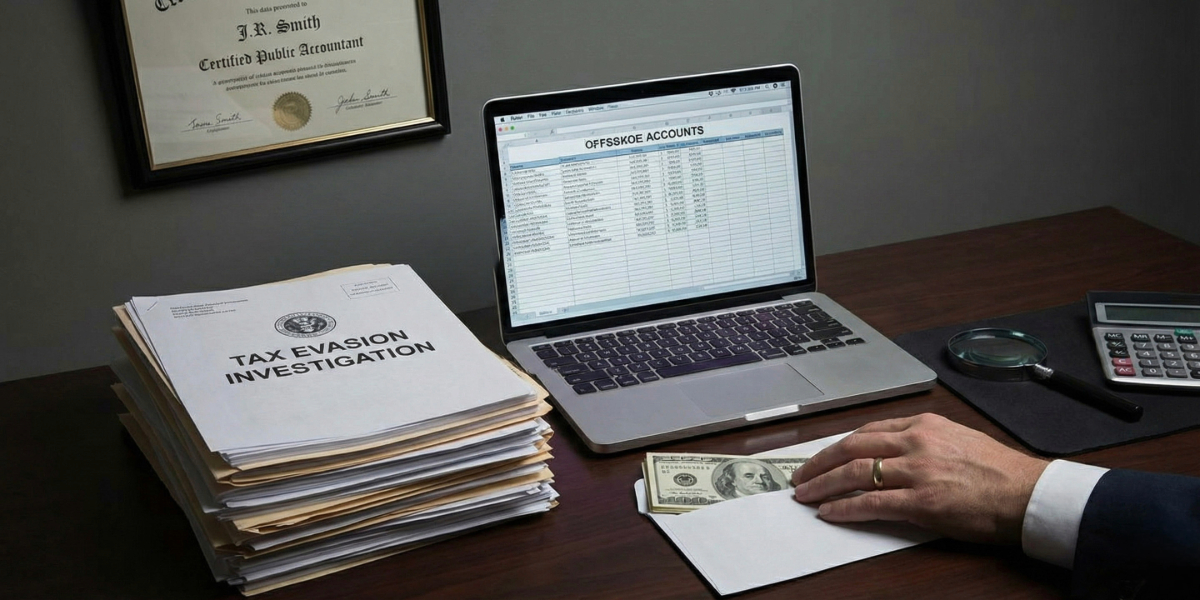
Tax fraud in Arizona generally involves knowingly providing false or misleading information on a tax return or related document. The key element is intent. Prosecutors must prove that a person acted intentionally or knowingly, not simply that a mistake was made.
Arizona Revised Statutes section 42-1127 makes it unlawful to knowingly make, present, or prepare a false return, statement, or other document in connection with any tax administered by the Arizona Department of Revenue. This statute applies to individuals and to professionals who prepare tax returns for others.
Tax fraud can include:
- Reporting less income than was actually earned
- Claiming deductions that are not legitimate
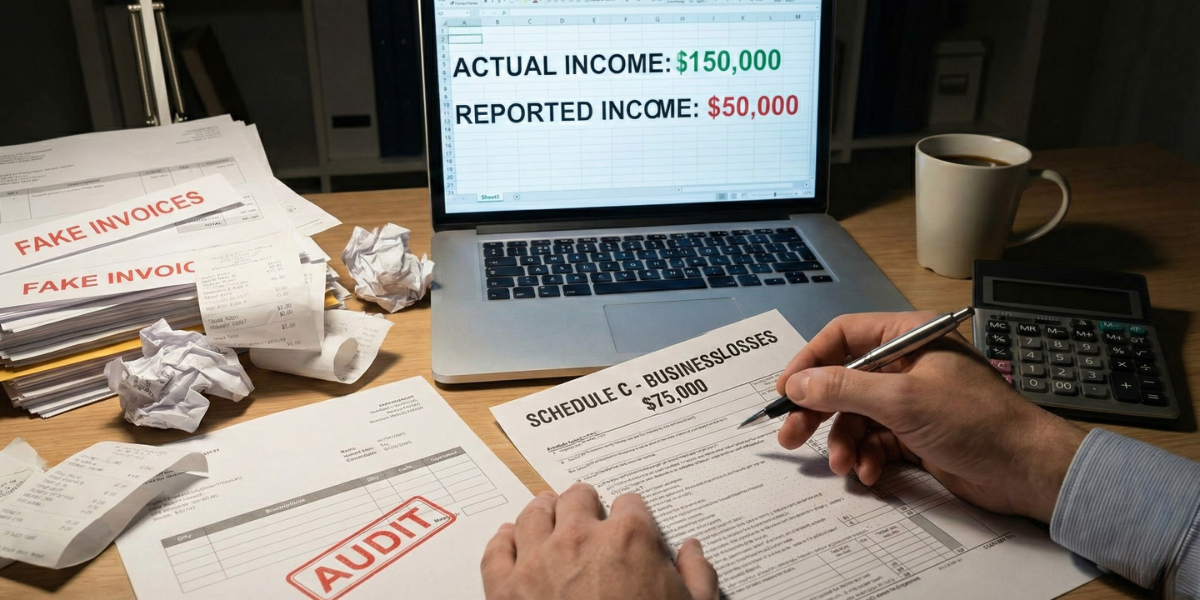
- Creating false invoices or documents to reduce taxable income
- Filing a return with fabricated business losses
Importantly, the crime does not require that the person successfully avoid paying taxes. The attempt itself, if done knowingly and intentionally, can be enough for criminal charges.
For example, imagine a small business owner in Scottsdale who creates fake receipts to inflate business expenses and reduce taxable income. Even if the Arizona Department of Revenue catches the issue before issuing a refund or assessing final liability, knowingly submitting false information could support a tax fraud charge under ARS 42-1127.
At the Law Offices of Daniel Hutto, we often see cases where the central issue is whether the conduct was intentional fraud or an accounting error. That distinction can make all the difference in how a case is charged and resolved.
What Is Tax Evasion in Arizona
Tax evasion is closely related but focuses more on deliberately avoiding the payment of legally owed taxes. While fraud centers on false statements, evasion often involves conduct intended to avoid tax liability or to escape collection.
Under ARS 42-1127, Arizona also criminalizes willful attempts to evade or defeat any tax. The statute covers not only false filings but also actions taken to avoid paying or collecting taxes.
Tax evasion may include:
- Failing to file tax returns over multiple years while earning income
- Hiding income in cash transactions
- Transferring property to relatives to avoid tax collection
- Using nominee accounts to conceal assets
The key element, again, is willfulness. Prosecutors must show that the person acted deliberately to avoid paying taxes, not merely that they were disorganized or financially struggling.
Consider a contractor in Tempe who receives substantial cash payments for jobs but chooses not to report that income year after year. By intentionally failing to report those earnings, the contractor may be accused of tax evasion.
In another scenario, a taxpayer in Mesa who already owes significant back taxes might transfer a vehicle or real property to a relative’s name to prevent the Arizona Department of Revenue from seizing it. That conduct could also be treated as evasion.
While tax fraud often involves the filing stage, tax evasion can occur after a liability has already been established.
Tax Fraud vs. Tax Evasion, Key Differences Explained
Although tax fraud and tax evasion overlap in many cases, Arizona courts analyze them based on different types of conduct.
Tax fraud typically involves dishonest statements made during the preparation or filing of tax documents. The focus is on false representations.
Tax evasion generally involves conduct designed to avoid paying or collecting taxes, even if the return itself was accurate. The focus is on efforts to defeat the tax obligation.
Here are some practical distinctions:
- Tax Fraud: Filing a false return, fabricating deductions, or misreporting income.
- Tax Evasion: Hiding assets, refusing to file returns, or taking steps to avoid collection.
- Fraud Can Be Charged Even If Unsuccessful: Attempted deception may be enough.
- Evasion Often Involves Ongoing Conduct: Such as repeated failure to file or concealment of income.
In some cases, both charges can be filed together. For example, a Phoenix business owner may underreport income on tax returns, which is fraud, and then later move profits into an undisclosed account to avoid paying assessed taxes, which is evasion.
When charges are stacked, the potential penalties increase. This is why it is critical to have experienced criminal defense counsel reviewing the case from the beginning.
Penalties for Tax Fraud and Tax Evasion in Arizona
Tax crimes in Arizona can be prosecuted as felonies or misdemeanors, depending on the amount of tax involved and the nature of the conduct.
Under ARS 42-1127, knowingly making false statements or attempting to evade tax is generally treated as a felony offense. Sentencing is guided by ARS 13-701 and 13-702, which establish ranges for felony convictions.
Below is a general summary of possible penalties. The actual sentence depends on prior criminal history and whether the offense is considered repetitive or aggravated.
| Offense | Typical Classification | Possible Prison Range | Relevant Statutes |
| Tax Fraud, False Return | Class 5 Felony | Up to 2.5 years for first offense | ARS 42-1127, ARS 13-702 |
| Tax Evasion, Willful Avoidance | Class 5 Felony | Up to 2.5 years for first offense | ARS 42-1127, ARS 13-702 |
| Higher Dollar or Repeat Cases | Class 4 or Class 3 Felony | 3.75 to 8.75 years | ARS 13-703, ARS 13-702 |
| Failure to File Without Intent | Misdemeanor or Civil Penalty | Probation, fines, civil assessments | ARS 42-1125 |
In addition to prison time, a person may face:
- Fines of up to 150,000 dollars under ARS 13-801
- Restitution for unpaid taxes, interest, and penalties
- Civil tax assessments and liens
- Damage to professional licenses and credit
Because tax cases often involve detailed financial records, they can take months or years to investigate. Early legal guidance is often critical to avoid mistakes during interviews or document production.
Defense Strategies in Arizona Tax Crime Cases
Tax cases are complex, but they often hinge on one key issue: intent. The state must prove beyond a reasonable doubt that you acted knowingly or willfully.
At the Law Offices of Daniel Hutto, we focus on challenging that element while also examining how the investigation was conducted.
Common defense strategies include:
- Lack of Intent: Many tax errors stem from misunderstandings of complex tax rules. If you relied on incorrect advice or made an honest mistake, that may defeat a fraud or evasion charge.
- Reliance on a Professional: If you provided accurate information to a tax preparer or accountant and they made the error, that may be a strong defense, particularly if you did not know about the mistake.
- Insufficient Evidence: The prosecution must prove that specific amounts were underreported and that the conduct was intentional. Weak documentation or unclear financial records can undermine their case.
- Unlawful Search or Seizure: Tax investigations may involve subpoenas, search warrants, or seizure of records. If law enforcement violated your constitutional rights, evidence may be excluded.
- Negotiated Resolution: In some cases, repayment plans, restitution agreements, or civil settlements can reduce criminal exposure. Early intervention by an experienced attorney can improve the chances of a favorable outcome.
Daniel Hutto’s experience as a former prosecutor gives him insight into how these cases are built and how financial evidence is presented in court. That perspective can be valuable when evaluating plea offers or preparing for trial.
Real World Examples of Tax Fraud and Tax Evasion
Example 1: A restaurant owner in Phoenix underreported sales by failing to include certain cash transactions in daily revenue reports. Over several years, this resulted in significant unpaid state taxes. When auditors discovered discrepancies between bank deposits and reported income, the owner was charged with tax fraud under ARS 42-1127. The case focused on whether the underreporting was intentional or due to poor bookkeeping practices.
Example 2: A real estate investor in Chandler owed substantial back taxes after an audit. Instead of setting up a payment plan, the investor transferred several properties into a family member’s name. Prosecutors alleged this was an attempt to evade tax collection. The charge centered on whether the transfers were legitimate estate planning steps or deliberate efforts to avoid payment.
These examples show how intent and documentation often become the central issues in court.
FAQs About Arizona Tax Crimes
Can I go to prison for tax fraud in Arizona?
Yes, felony convictions can carry prison sentences. However, some cases may result in probation, especially for first-time offenders and lower dollar amounts.
Can I be charged with both tax fraud and tax evasion?
Yes. If you file a false return and later take steps to hide assets or avoid payment, prosecutors may file multiple charges.
What if I simply forgot to file my taxes?
Failure to file without fraudulent intent is often treated as a civil issue or misdemeanor under ARS 42-1125. Intent is what typically turns a case into a felony.
Does paying back the taxes stop criminal charges?
Repayment can help during negotiations, but it does not automatically prevent prosecution if the state believes fraud or evasion occurred.
How long does Arizona have to file charges?
The statute of limitations for many tax felonies is generally seven years, though certain circumstances can extend that time period.
Should I speak with investigators if they contact me?
It is wise to speak with a defense attorney before making statements. Anything you say can be used against you in a criminal case.
How the Law Offices of Daniel Hutto Can Help

Tax fraud and tax evasion allegations are serious. They can affect your freedom, finances, and professional reputation. These cases often involve detailed financial records and complex legal standards that require careful analysis.
At the Law Offices of Daniel Hutto, we provide free one-on-one consultations so you can speak directly with an attorney about your situation. We review audit findings, examine financial documents, and assess whether the state can truly prove intent beyond a reasonable doubt.
Because Daniel Hutto has worked inside the prosecution system, he understands how the state evaluates tax crime cases. He uses that knowledge to identify weaknesses, negotiate strategically, and prepare for trial when necessary. Our firm serves clients throughout Arizona, with a primary focus on Maricopa County and Pinal County.
If you are under investigation or have been charged with tax fraud or tax evasion, do not wait to get legal guidance. Call the Law Offices of Daniel Hutto at 602-833-2741 to schedule your confidential consultation. Taking action early can make a meaningful difference in the outcome of your case.


